Sunday, 10 March 2019

Captain Marvel (2019)


Directors: Anna Boden, Ryan Fleck
Produced by: Kevin Feige
Screenplay by: Anna Boden, Ryan Fleck, Nicole Perlman, Geneva Robertson-Dworet, Meg LeFauve, Liz Flahive, Carly Mensch
Based on: Carol Danvers; by Roy Thomas; Gene Colan
Production company: Marvel Studios
Release date: March 8, 2019
Cinematic Universe: MCU (#21)
Log-line: A headstrong extraterrestrial woman crash-lands in 1990’s America, on the hunt for shapeshifting aliens. However, as the planet stirs up lost memories within her, she begins to question if she’s on the right side of the war she’s fighting. Also, there’s a cat. A space cat.

2.5/5 Bones

Let’s get this out of the way: it’s a relief to have her. A superheroine headlining in a goddamn functional supersuit without boob armour or heels would’ve meant the world to me when I was a kid. I wish I’d seen it instead of Cat-Woman -  the S&M music video masquerading as empowerment that was the superheroine film I had instead. But there’s something undercooked in this lore-based episode of the MCU nonetheless, and I can’t help but feel that Carol deserved better.

Friday, 26 October 2018

NFB Short Film Reviews: "The Zoo" and "Shop Class"

Hello, everyone! I’ve been given the opportunity to see some shorts produced by the NFB that will be screening in SPARK this weekend! This is your reminder to squeeze some animation between your Halloween-mandatory revelries and sinful deeds. The first is screening in a block tonight, and I hope to see you there! Here are the reviews.

But, really, the short answer is both were great and very Canadian, and of course you should go see them.

Shop Class
Dir. Hart Snider
SEE IT AT: SPARK: Short Films After Dark (19+) - Friday - October 26, 11:00 PM – Vancity Theatre


Man, I was not prepared to go flying back to the exact headspace I occupied from Grade 7-12. It was uncomfortably easy, reminding me how psychologically close we all are to those days, no matter how ‘grown up’ we think ourselves now. (For the record, I don’t think of myself as a grown up. How can I when I still don’t entirely grasp what ‘chard’ is and how to incorporate it into daily life?) Shop Class captured the inner narration, fear of humiliation, and the existential dread of having your worth as a human being tied to a letter grade.  A warbled narration from voice actor Fred Ewanuick takes us through director-writer Hart Snider’s experience of Shop in juniour high, despite having more interest in Home Ec - which is as girls-only as Shop is boys-only. Driving home that gender division is the dreaded Mr. P, a man who grades your machismo alongside your craftsmanship. He’s also voiced by Fred Ewanuick, a performance that is at once funny and terrifying, as every word sounds like he’s gritting his teeth to keep from punching yours in.

The story is recognizably Canadian and universal, but it's hampered by some lackluster design decisions. The background characters are pretty run-of-the-mill and lack authenticity. There's the bully with a torn jean jacket, the girl who bats her eyes and never speaks, a few incidentals who fail to leave an impression. The story is told in such a genuine way that you believe its events, even when Mr. P’s sadism reaches ridiculous heights. But having such rote side characters takes some of that away and makes things feel more artificial. I assume the creator didn’t want to implicate real people who are shown in less-than-favourable light in the short, but I do wish he’d tried for designs and acting that didn’t feel so generic. It’s especially grating because the short itself is about how stereotypes are inhibiting and regressive, and having such cliches seems hypocritical.

 Luckily, Mr. P takes up a lot of slack. He's a memorable tyrant because he looks like an over-indulgent Santa Claus squeezed into an office shirt and tie. You can tell that a lot of his most toxic behaviour comes from his frustration with his position and failure to live up to his own masculine ideals.


Animation-wise, it leaves much to be desired. When Mr. P first makes his entrance he’s forced to squeeze through a door too small for his overwhelming physique. This should be a moment that’s both hilarious and a memorable introduction to how the students see him. Yet the gag plays out lifelessly, without pushing the drawings or timing. While the character designs and art style are fine on their own, they do not integrate into the backgrounds, which are heavily rendered and charmless. The best-looking sequence is the climax, where a more unique mix of 2D and 3D elements creates a maelstrom out of paper cut-out clouds, a tower of stone, and Mr. P achieving his true ambition of becoming a vengeful thunder god, complete with lighting effects. It makes you wish that the overall look of the film was similarly inspired.


All that said, I really like this short. It managed to be funny, authentically juvenile, and a little subversive. It's just that its likability leans heavily on the charm of the narration and voice work, while the animation didn’t bring its A game to match. It's worth seeking out for the short glimpses into Mr. P’s psychology - a big man trying to be bigger even when surrounded by children, with a hidden fondness for ‘girly’ activities like calligraphy. It paints a fascinating man who has more in common with our awkward protagonist than would first appear. 

Also, Mr. P - it’s funny how concerned you are with manliness in your class, considering Shop, when a verb, is often associated with the other gender. Ah, stereotypes...good thing this is a period piece and we don’t have to deal with that sort of thing nowadays, eh?

Animal Behaviour
Dir. David Fine and Allison Snowden
SPARK : Opening Night Shorts (Darn, I guess I missed that…it’ll be around, though!)

Well, obviously, I have to plead Conflict of Interest to the court in this case, as I am in the credits. So I’ll just say ‘See it if you love me.’ There. That’s hardly manipulative or underhanded.

But seriously, even after working on this short over a couple years, it still makes me laugh. That’s gotta count for something.

The Zoo
Dir. Julia Kwan
SEE IT AT: SPARK Short Films: Made in Canada program at 3:30pm Sat, Oct 27th at the Vancity Theatre


The Zoo is directed by the filmmaker behind Eve and the Fire Horse (2005) and Everything Will Be (2014). It’s a dialogue-less short that draws parallels between the twin abandonments of a bear at a defunct zoo and an elderly Chinese man being pushed to the fringes of a gentrifying Vancouver. It’s a thoughtful correlation. We’re briefly shown the childhoods of both characters. As a cub, the bear is captured in the wild after the death of his mother, while the little boy (the larval stage of an old man) makes a ritual out of taking his family photograph in front of the cub’s exhibit. Flash forward to the future and the zoo is closing, with all the animals relocated. All except the ancient polar bear, who is too infirm to go along with them. After years of noise and company, he is now left utterly alone.

 I went into the film blind and did not realize that the bear is based on a real figure. Tuk the Polar Bear was the last remaining animal at the Stanley Park Zoo, which was closed in 1996. The exhibit is recreated faithfully in the short, emphasizing the austere concrete, long shadows and the rather brutalist approach zoos of the 1950s had to interior design. The image of a white bear, alone and bright against the hard angles and harder grays of his exhibit, is a striking one. While it’s unaddressed in the short, the zoo was closed as public opinion turned against it. Though previously considered a landmark attraction for the city, its cramped quarters, artificial environments, and inability to modernize to current ethical standards resulted in the public voting to close it. Tuk died in 1997 at the age of 36, a year after the closure of the zoo. The film names the bear as ‘Kut’ and his age listed as 45. 36 is only one year less than the oldest a polar bear has ever lived in recorded history, so at 45 Kut would have been creakier than a rusty chair being sat on by a fidgety child. Speaking of children and creakiness, Kut’s circumstances are mirrored in the old man’s own life. (An old man is the adult stage of a boy). Direct shots compare the loneliness, abandonment, squalor and cramped conditions of the old man’s apartment to Kut’s pit. In his old age, he has been similarly forgotten.

There are further parallels. Jun, the old man, is a veteran of an unnamed war. (My guess would be Vietnam, as that would about fit with the timeline. Canada did not participate, but 30,000 men volunteered, so it’s possible Jun was among them. Participating in a historically unpopular war would also tie that history to the changing attitudes towards zoos). Both are shown to have lost their parents and experienced violent trauma. There’s tension between them and their environments. Yet they seem to exist at arm’s length from one another, leaving me wishing such ties and ideas could have been emphasized more. It might've helped make it more conclusive, since the ending lacks resolution. I feel like I’ve watched the first few minutes of a longer film. One I’d happily watch, but a short film lives and dies on the impact of its final moments.

Animated with digital cut-outs, the art style of the film oscillates between pleasing and garish. There are many poignant, effective shots -  one image I’ll hold on to for some time is Kut in his pit as the shadows of the departing animals pass over him. The simplicity makes it striking. Other shots drown in visual noise. Digital overlays and paints clash against scanned paper textures. Backgrounds, foregrounds and midgrounds buzz with excruciating and equal detail, making it difficult to know what is of importance in the frame, though there are some where the digital and the analogue come together effectively. The puppets are textured to look like their stop-motion forebears, complete with shadows from overlapped paper and swivelling articulation. This is appreciated, and yet the effect is also undermined by occasional short-cuts. For example, in one scene Jun awakes from a nightmare and takes several heaving breaths. If replication of analogue execution was the intent, I would have chosen to create several more ‘chest’ pieces expanding outwards and swapped them in and out, as was done beneath the camera in the past. Instead, the film digitally bulged the original chest piece, giving the character a swelling-bullfrog effect. Oddly, the shot before achieved the gasping by moving the pieces normally and keeping more of an analogue charm. These issues are elsewhere in the film - there’s a slidiness to the animation that makes movement too smooth and constant. I wonder if the choice to make this digitally was made out of convenience, or to contrast the slicker ‘current’ technology of animation against a simulacrum of the old-fashioned. If so, I think having only Kut, Jun and characters in past flashbacks as distinctly ‘old school’ in their animation style (if they were the only paper cut-out characters, for example), contrasted against more modern techniques (2D or 3D animation) would have been a more deliberate and effective way to show that mismatch (the world literally advancing - technologically and otherwise - without them). 


Still, I can’t deny that I immediately wanted to know more about what the short was based on. I spent a great deal of time reading up on The Stanley Park Zoo and the animals that lived there, including watching this delightful documentary made about it by the NFB. It was fascinating to hear how important the Zoo was, and how beloved, before public opinion shifted. A whole generation of children and immigrants to the city have no memory of it. The polar bear pit is used for salmon spawning now, a more nature-friendly use for the space. Reading about how seniors are struggling to live in the increasingly gentrified and expensive city of Vancouver has a much less happy ending.

Overall, I think the short introduces some thought-provoking concepts about how society quickly moves on from the old, leaving behind those who are unable to keep up, even if their suffering is what made our present. Perhaps society moves on because it finds the social context and attitudes these people and bears and history represent as uncomfortable, as distasteful relics of a less-informed time. There’s an idea of how ‘inconvenience’ leads us to just avoid thinking of them all together, and therefore allowing them to suffer alone. The film certainly starts interesting discussions, and if there’s a chance to get a longer work out of this it could flesh out those concepts more conclusively I'd leap to see it. 

Oh, one other thing. I can’t help but feel that the director missed a chance for a visual pun. Those pictures that the boy took with his family as he grew up? They should have been POLARoid photos. Eh? Eeehhhh?

Listen, puns are one of the few methods I know for ending things. That could just be because they make people leave, though…


Thursday, 19 July 2018

TGSD: Ant-Man (2016) Or: Appreciation for the Art of Villainy, which this film does not have


Directed by: Peyton Reed
Produced by: Kevin Feige
Screenplay by: Edgar Wright, Joe Cornish, Adam McKay, Paul Rudd
Based on: Ant-Man by Stan Lee, Larry Lieber, Jack Kirby
Starring: Paul Rudd, Evangeline Lilly, Michael Douglas, Michael Pena
Cinematography: Russell Carpenter (Ooo, he did Titanic, nice!)
Production company: Marvel Studios
Release date: July 17, 2015
Cinematic Universe: MCU (#12)


Logline: An ex-con finds himself caught up in an uncomfortable family squabble between an aging superhero and his daughter. He takes up the mantle of Ant-Man from the old guy to...um...stop a guy from...killing cute baby lambs? And making evil Ant-Men for the military? Also the ex-con is trying to be a part of his own daughter’s life but his ex-wife won’t let him until she changes her mind because he puts his daughter in danger and why would she do that and...geez...what the heck is this movie about...memory...fading...into nothingness...zzzz...also the whole movie realizes that Hope really should be the main superhero but doesn’t know what do about it other than lampshade it and throw in an apology in a post-credits scene zzz...


Bone Ranking: A Potato Chip of a Movie.
It’s a fine flavour for a moment, but you ultimately forget you ever had it and are left unsatisfied.


Quickie Review:

No more Mrs. Nice-to-the-MCU. Time to get angry and break some stuff.

Ant-Man is a small film in more ways than one. That’s a nice thing, a good break after having my head pounded on either side by the twin garbage pail lids of Age of Ultron and the rest of the MCU’s Phase 2. But while having smaller and theoretically more personal stakes is a good idea, being a slight film is not. I’ve seen this film three times now, and each time I retain less and less. Truly, there are two parts of the film that make it worthwhile: the end fight sequence on the Thomas the Tank Engine playset, and the character of Luis, Scott Lang’s old cellmate. He has two great qualities: he appreciates abstract expressionism, and if his mouth could somehow separate itself from the rest of him it ‘d leave Usain Bolt in the dust. I also enjoy the camerawork in the ‘shrunk’ scenes, where the shallow depth of field and sonorous sound work sell the big, dangerous world. However, the journey to get to the climax doesn’t really add up, and the resolution feels unearned. Why would Scott be allowed into the family he directly endangered?

On the whole, Ant-Man is...fine. It’s just fine. After the disappointment that was every singe film in Phase 2, fine was better, but still not good enough. I’d started to tune out after my personal disappointments with Winter Soldier and Guardians of the Galaxy. This was not the one to bring me back. If anything, its reuse of Iron Man’s formula was deeply apparent and made me even less excited to see what Marvel would rehash next. But it was the film that finally broke me on one score...


Alright, Let’s Talk Marvel’s (and everyone else’s) Villain Problem:
Why Good Villains Make Good Stories Make Good Heroes

Everyone knows about the MCU’s villain problem. Kevin Feige, CEO of Marvel Studios, has indicated it’s intentional - that he wanted their company to be the one that focused on the heroes. They do sell more toys, after all. He’s been quoted saying they don’t really want spotlight the baddies at all, that they’d rather make it about the hero’s inner journey. That can work - Iron Man proved as much. But Iron Man did so because, as I’ve previously written, Iron Man is both hero and villain of that story. He has a lot of personal issues to overcome. The same can’t be said of Scott Lang, who, yes, is a former criminal trying to go straight for the sake of his kid, but he still begins the film a decent person and ends the film as more-or-less the same decent person. In fact, the film goes to great lengths to reveal that his supposed ‘crime’ was more of a Robin Hood affair, protecting the little guy from the big, bad corporations and being unfairly punished for it. I suppose the real journey belongs to Hank Pym, who learns to trust Hope, his daughter, with both the truth of her mother’s death and in her abilities to save the day and get home safe. But she herself also has no real character arc. In my opinion, both of these problems can be tied to the larger one in the MCU; that goshdarn villain problem.

Thursday, 5 July 2018

TGSD - Superman (1978)


Directed by: Richard Donner

Screenplay by: Mario Puzo

Starring: Christopher Reeves, Margot Kidder

Based on: Superman by Jerry Siegel & Joe Shuster

Distributed by : Warner Bros.

Release date: December 15, 1978

Logline: After someone left the stove on, the alien planet Krypton explodes. But not before Jor-El, a leader of the planet who uses far too much bleach in his laundry, sends his only begotten son to Earth. Somehow, the kid turns out alright.

Bone Ranking: A Hug in Cinematic Form

A charming film that somehow manages to overcome cynicism and make you not only believe a man can fly, but hope for it.

Wednesday, 4 April 2018

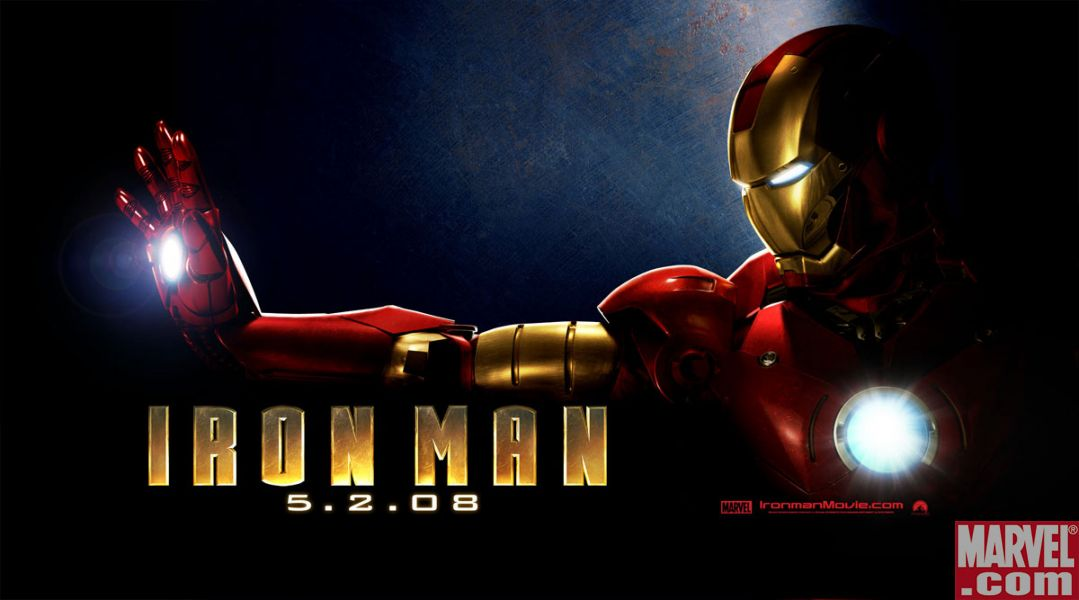
TGSD: Iron Man (2008) : Iron Man is the Quintessential Superhero - and Supervillain - of the Modern Era


Release date: May 2, 2008
Director: Jon Favreau
Cinematography: Matthew Libatique
Based On: Iron Man, by Stan Lee
Production Company: Marvel Studios
Cinematic Universe: MCU (#1)

Logline: An immature, obscenely wealthy arms merchant is fatally injured and captured by terrorists armed with weapons of his own manufacture; in order to escape and undo the harm he his brought to the world, he must become a weapon himself.


Bone Ranking: Essential
Cinematically or Genre Significant; Must-See 


Iron Man is the Quintessential Superhero - and Supervillain -  of the Modern Era

Iron Man was the stone upon which the MCU built its church, sometimes to its detriment. Films like Doctor Strange and Ant-Man crib off its formula to such an extent you would think their existence would make this film less special. And yet, it is those newer films that suffer in comparison to what this film pulls off.  Iron Man is political; Iron Man is fun; Iron Man is more than a ‘superhero’ film - it is the superhero film that best represents 2008, more so than even The Dark Knight. Robert Downey Jr. is Tony Stark, who is Iron Man: his charisma and natural personality becomes the character, a formula that Marvel wouldn’t realize it needed to implement for all its heroes until Phase 3. In terms of what would become the Marvel formula, this film contributes its two biggest problems: an underdeveloped and inconsequential villain and third-act smashing that feels less than the film preceding it. It also contributes the MCU’s biggest strengths - an emphasis on exploring character, inner conflict, redemption, the use of humour to grease a story along, political commentary, and ‘heart’. In this case, the journey to find one in the body of a man who tosses women aside like wrapping paper once he’s had his fun with them; a man who proudly accepts the moniker of ‘Merchant of Death’; a man of great brilliance, content to use that brilliance not to help mankind, but to enable its most destructive and violent impulses. A man who is a capitalist first, a playboy second, and an example of what the worst of modern excess can produce.  Steve Rogers is what America wishes it was; Tony Stark is what America really is. The rivalry between the two characters is understandable. In order to find his heart, Tony first had to have his physical one torn apart by shrapnel; in order to make something of his life, he first had to nearly lose it. Before he returned to his mountaintop, he had to first grub about in a cave with a box of scraps. Tony Stark is the 1% made to reckon with the world he has wrought...and that continues to be relevant.


The Great Superhero Drowning: A Masochistic Marathon into the Dominating Genre of Hollywood


Superheroes and I have never gotten along. I remember looking at a box of my father’s old comics as a kid and being in a strange state of repulsion and attraction; frankly those feelings persist to this day. I was disturbed by the imagery of disgustingly muscled men and dangerously bodacious women who clung to their legs. I was intrigued by the bizarre buildings, monsters, and general madness of their surrealistic mashups - such as undead Nazis riding space dragons. (My father collected more Weird War and Twilight Zone comics than he did superhero fare). At school, I’d scoff at how ridiculous and camp the very notion of superheroes were, and rolled my eyes at the little boys with Spiderman or Superman on their shirts. The notion of vigilantes flaunting the law in their jammies just didn’t appeal to me.

Then along came a spider, as directed by Sam Raimi. Two weeks later, I was making that hang-loose webslinging gesture with my hands and uttering swinging sound effects with the rest of fashion-unconscious boys. Raimi’s films were fun, but they were also filled with pathos and humanity. Over time, I discovered other superheroes that resonated. Cartoon Network’s Teen Titans series captured the angst and humour of adolescence, The Dark Knight proved that I could be made to tolerate Batman with a good enough story and a fantastic enough villain, and Hellboy introduced me to my favourite director. Before I knew it, some of my favourite filmmakers were crafting pieces of a cinematic universe, and I was dragged, kicking and screaming, into a turbulent relationship with the MCU.

Now that the genre has successfully taken over Hollywood and we’re looking at another slew of films, not the least of which is the ‘season finale’ of the MCU that is the two-part Infinity War films, I decided it was time to take the plunge. Over the next year, I’m going to watch 100 films/TV shows about superheroes and write a short essay on the themes and ideas of each one. I do this because a colleague told me that superhero films were mostly hollow and had no ideas or themes worth exploring. Not only do I think that’s untrue, I think it’s very important to look at the most popular current cinema. Why are these films resonating? What do they say about us, as a society? Why are we so attached to characters an 8-year-old me dismissed for ‘forgetting to put their underwear on BEFORE they put on their pants’? Sometimes, the superhero genre worries me. But I also see a lot of a good in it. Mostly, I’m frustrated because I believe it can be better, and should be.

Feel free to come with me on my hellish journey into the bowels of the DCEU, discover how many issues one can have with a father as we traverse the entirety of the MCU, before finally watching the old classics everyone just absorbs from the pop culture zeitgeist instead of actually experiencing for themselves. Let’s see if my love-hate relationship with the genre can finally break me - or teach me something new.

Thursday, 23 February 2017

Alice Through the Looking Glass


Rating_bones_ribs.pngRating_bones_arm_bone_blue.jpg

Bones

*Not as Bad as it Should Have Been Award 2017 *
Honourable Mention Best of 2017

In the lead-up to my much overdue Best of 2017 list, I thought I’d include a review for a film that also features a very late and harried mammal. Or rather, its superior sequel. It was originally intended to be a quick mention on the Best List as a way to thumb my nose at convention like the rebel I am. Ha! Take that, established critics and review sites! I think this already forgotten and popularly disliked Hollywood effects explosion was more worth my time than Toni Erdman! Go ahead! GASP. But seriously, I can’t lie, I did enjoy this film a lot more than many others this year. It just had a spark...allow me to explain.

Is it garish? Redundant? A sequel to one of the most disliked adaptations of all time? Yes in triplicate, I’m afraid. But if there’s one thing most of us can cheer for, it’s an underdog…or a reformed villain. And this movie really did surprise me. It’s not quite a fully-rounded ‘good’ film, but there are certainly many good elements, and it dodges around many large gaping pits of bad, if not all of them. It even made me almost like the previous instalment with the way it used its established elements to enjoyable effect. (And I HATED its predecessor) Make no mistake, this is more like its maligned prequel than the books from which it purloins its title - but instead of a horrible “Chosen One”, war-story rehashing, this film attempts to actually have emotional heft and a more unique storyline. Sure, it still doesn’t ‘get’ what Alice in Wonderland should be about, but as its own thing that has definitively separated itself, it’s surprisingly palatable.