Wednesday, 4 April 2018

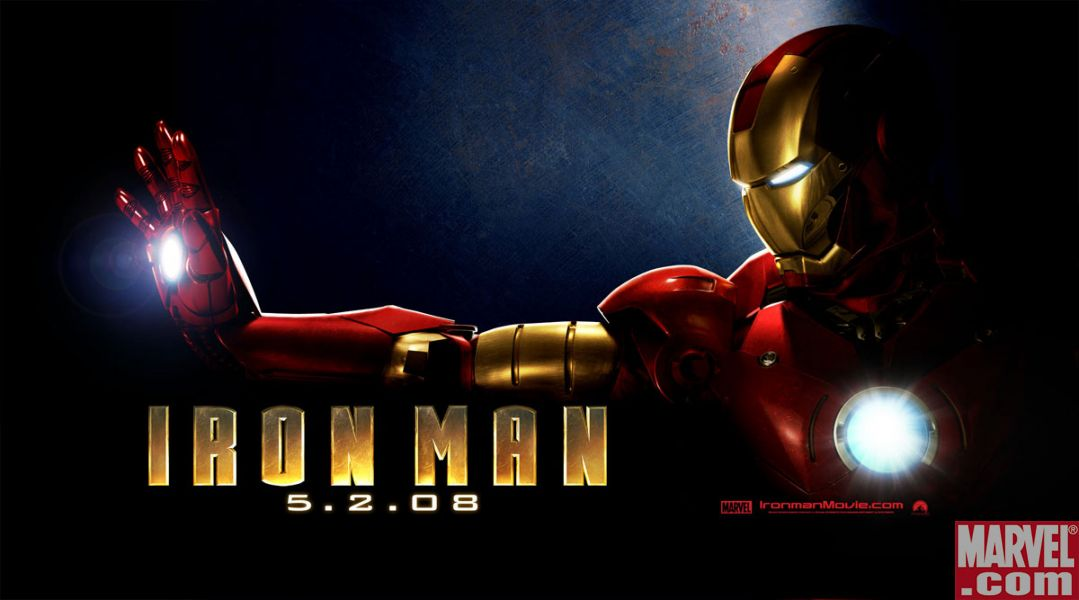
TGSD: Iron Man (2008) : Iron Man is the Quintessential Superhero - and Supervillain - of the Modern Era


Release date: May 2, 2008
Director: Jon Favreau
Cinematography: Matthew Libatique
Based On: Iron Man, by Stan Lee
Production Company: Marvel Studios
Cinematic Universe: MCU (#1)

Logline: An immature, obscenely wealthy arms merchant is fatally injured and captured by terrorists armed with weapons of his own manufacture; in order to escape and undo the harm he his brought to the world, he must become a weapon himself.


Bone Ranking: Essential
Cinematically or Genre Significant; Must-See 


Iron Man is the Quintessential Superhero - and Supervillain -  of the Modern Era

Iron Man was the stone upon which the MCU built its church, sometimes to its detriment. Films like Doctor Strange and Ant-Man crib off its formula to such an extent you would think their existence would make this film less special. And yet, it is those newer films that suffer in comparison to what this film pulls off.  Iron Man is political; Iron Man is fun; Iron Man is more than a ‘superhero’ film - it is the superhero film that best represents 2008, more so than even The Dark Knight. Robert Downey Jr. is Tony Stark, who is Iron Man: his charisma and natural personality becomes the character, a formula that Marvel wouldn’t realize it needed to implement for all its heroes until Phase 3. In terms of what would become the Marvel formula, this film contributes its two biggest problems: an underdeveloped and inconsequential villain and third-act smashing that feels less than the film preceding it. It also contributes the MCU’s biggest strengths - an emphasis on exploring character, inner conflict, redemption, the use of humour to grease a story along, political commentary, and ‘heart’. In this case, the journey to find one in the body of a man who tosses women aside like wrapping paper once he’s had his fun with them; a man who proudly accepts the moniker of ‘Merchant of Death’; a man of great brilliance, content to use that brilliance not to help mankind, but to enable its most destructive and violent impulses. A man who is a capitalist first, a playboy second, and an example of what the worst of modern excess can produce.  Steve Rogers is what America wishes it was; Tony Stark is what America really is. The rivalry between the two characters is understandable. In order to find his heart, Tony first had to have his physical one torn apart by shrapnel; in order to make something of his life, he first had to nearly lose it. Before he returned to his mountaintop, he had to first grub about in a cave with a box of scraps. Tony Stark is the 1% made to reckon with the world he has wrought...and that continues to be relevant.


The Great Superhero Drowning: A Masochistic Marathon into the Dominating Genre of Hollywood


Superheroes and I have never gotten along. I remember looking at a box of my father’s old comics as a kid and being in a strange state of repulsion and attraction; frankly those feelings persist to this day. I was disturbed by the imagery of disgustingly muscled men and dangerously bodacious women who clung to their legs. I was intrigued by the bizarre buildings, monsters, and general madness of their surrealistic mashups - such as undead Nazis riding space dragons. (My father collected more Weird War and Twilight Zone comics than he did superhero fare). At school, I’d scoff at how ridiculous and camp the very notion of superheroes were, and rolled my eyes at the little boys with Spiderman or Superman on their shirts. The notion of vigilantes flaunting the law in their jammies just didn’t appeal to me.

Then along came a spider, as directed by Sam Raimi. Two weeks later, I was making that hang-loose webslinging gesture with my hands and uttering swinging sound effects with the rest of fashion-unconscious boys. Raimi’s films were fun, but they were also filled with pathos and humanity. Over time, I discovered other superheroes that resonated. Cartoon Network’s Teen Titans series captured the angst and humour of adolescence, The Dark Knight proved that I could be made to tolerate Batman with a good enough story and a fantastic enough villain, and Hellboy introduced me to my favourite director. Before I knew it, some of my favourite filmmakers were crafting pieces of a cinematic universe, and I was dragged, kicking and screaming, into a turbulent relationship with the MCU.

Now that the genre has successfully taken over Hollywood and we’re looking at another slew of films, not the least of which is the ‘season finale’ of the MCU that is the two-part Infinity War films, I decided it was time to take the plunge. Over the next year, I’m going to watch 100 films/TV shows about superheroes and write a short essay on the themes and ideas of each one. I do this because a colleague told me that superhero films were mostly hollow and had no ideas or themes worth exploring. Not only do I think that’s untrue, I think it’s very important to look at the most popular current cinema. Why are these films resonating? What do they say about us, as a society? Why are we so attached to characters an 8-year-old me dismissed for ‘forgetting to put their underwear on BEFORE they put on their pants’? Sometimes, the superhero genre worries me. But I also see a lot of a good in it. Mostly, I’m frustrated because I believe it can be better, and should be.

Feel free to come with me on my hellish journey into the bowels of the DCEU, discover how many issues one can have with a father as we traverse the entirety of the MCU, before finally watching the old classics everyone just absorbs from the pop culture zeitgeist instead of actually experiencing for themselves. Let’s see if my love-hate relationship with the genre can finally break me - or teach me something new.